
How to Choose the Right Malaria Tablets — Advice for Chelmsford Travellers
Choosing the right malaria tablets is not a one-size-fits-all decision — the most appropriate antimalarial for you will depend on your destination, the specific malaria risk in the areas you are visiting, your medical history, any medications you currently take, and practical factors such as how often you are willing to take a tablet and how well you tolerate particular drugs. The four main antimalarial options available in the UK are atovaquone-proguanil (Malarone), doxycycline, mefloquine (Lariam), and chloroquine with or without proguanil, each of which has its own advantages, side effect profile, and suitability for different destinations and patient groups. A personalised travel health consultation is the only way to determine which antimalarial is truly right for your trip, and at The Village Pharmacy in Chelmsford, our expert team can assess your individual circumstances, review your destination’s resistance patterns, and prescribe the most appropriate antimalarial medication — all without the need for a GP referral.
Getting the right malaria tablets before you travel is one of the most important steps you can take to protect your health abroad. Book a consultation with our travel health team at The Village Pharmacy in Chelmsford today.
Key takeaways
- The right malaria tablets depend on your destination, health history, other medications, and personal preferences — there is no universal best option.
- Atovaquone-proguanil (Malarone) is the most commonly prescribed antimalarial for UK travellers due to its efficacy, tolerability, and convenient dosing schedule.
- Doxycycline is a cost-effective alternative that also provides protection against other travel illnesses, but must be taken daily and can cause sun sensitivity.
- Mefloquine (Lariam) is taken weekly but carries a risk of neuropsychiatric side effects including vivid dreams, anxiety, depression, and in rare cases more serious and potentially long-lasting psychiatric reactions — careful patient screening is essential before prescribing.
- No antimalarial provides 100% protection — bite prevention measures such as insect repellent, long clothing, and mosquito nets are essential complements to medication.
- Malaria tablets are available on private prescription at The Village Pharmacy in Chelmsford with no GP referral required.
The Importance of Malaria Tablets
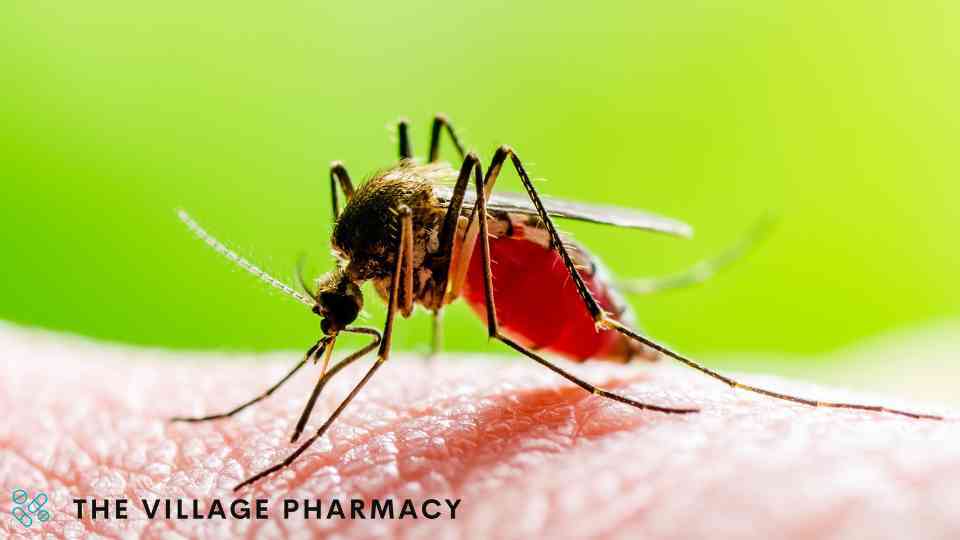
Malaria is a potentially life-threatening disease caused by Plasmodium parasites transmitted through the bites of infected female Anopheles mosquitoes. It is endemic in large parts of Sub-Saharan Africa, South Asia, Southeast Asia, Central and South America, and parts of the Middle East and Oceania, with Sub-Saharan Africa accounting for the vast majority of global malaria cases and deaths. According to the World Health Organization (WHO), there were an estimated 249 million cases of malaria globally in 2022, making it one of the most significant infectious disease threats facing travellers.
The species of malaria parasite present varies significantly by region, and this has a direct bearing on which antimalarial is most appropriate. Plasmodium falciparum — the most dangerous species, responsible for the majority of severe illness and death — is predominantly found in Sub-Saharan Africa and parts of Southeast Asia. Resistance to certain antimalarials is also a critical consideration: chloroquine resistance is now widespread across most malaria-endemic regions, and in some areas of Southeast Asia, resistance to other antimalarials has also emerged, making destination-specific prescribing essential.
Choosing the wrong antimalarial — or failing to take any at all — can have serious consequences. Malaria can progress rapidly from mild flu-like symptoms to severe illness involving organ failure, cerebral malaria, and death within days if not treated promptly. This is why taking the right malaria tablets consistently, alongside robust insect bite prevention measures, is the cornerstone of any travel health plan for at-risk destinations.

Malaria Tablets Available in the UK
There are four main antimalarial medications available for UK travellers, each with its own mechanism of action, dosing schedule, side effect profile, and suitability for different destinations and patient groups.
| Antimalarial | Dosing Schedule | Best For | Key Considerations | Suitable For Children |
|---|---|---|---|---|
| Atovaquone-Proguanil (Malarone) | Daily, starting 1–2 days before travel and continuing for 7 days after return. | Most malaria-endemic destinations, including Sub-Saharan Africa and short trips. | Excellent tolerability and commonly prescribed. Must be taken with food. Higher cost than doxycycline. | Yes – paediatric tablets available (weight dependent). |
| Doxycycline | Daily, starting 1–2 days before travel and continuing for 4 weeks after return. | Most malaria-endemic destinations, including areas with drug resistance. | Cost-effective. Can cause photosensitivity and gastrointestinal upset. Must be taken with food and plenty of water. | Not suitable for children under 12 years or during pregnancy. |
| Mefloquine (Lariam) | Weekly, starting 2–3 weeks before travel and continuing for 4 weeks after return. | Longer trips and situations where other options are less suitable. | Convenient weekly dosing but requires careful screening due to potential neuropsychiatric side effects. Not suitable for people with psychiatric conditions or epilepsy. | Yes – dose is weight dependent. |
| Chloroquine With Proguanil | Chloroquine weekly and proguanil daily. | Limited destinations without significant chloroquine resistance. | Rarely recommended due to widespread resistance in most malaria-endemic areas. | Yes – dose is weight dependent. |
This table is for general guidance only. The right antimalarial for you depends on your specific destination, health history, and personal circumstances. Always seek personalised advice from a qualified travel health professional.
Choosing the Right Malaria Tablets for You
Beyond destination and resistance patterns, a number of personal factors play an important role in determining which antimalarial is the most appropriate choice for an individual traveller. Your medical history is perhaps the most significant of these: mefloquine, for example, is contraindicated in those with a history of psychiatric illness, seizures, or cardiac conduction disorders, while doxycycline is not suitable for pregnant women or children under 12 years of age. Atovaquone-proguanil is contraindicated in those with severe renal impairment — creatinine clearance less than 30ml/min — and an alternative antimalarial should be considered for patients in this group.
Your current medications also matter. Doxycycline can interact with a number of drugs, and atovaquone-proguanil may interact with certain anticoagulants. A thorough medication review during your travel health consultation ensures that any potential interactions are identified and an appropriate alternative is recommended where necessary. This is another reason why obtaining your antimalarial prescription through a qualified travel health professional rather than an online pharmacy or general retailer provides a significantly higher standard of safety.
Practical considerations such as trip length, dosing preference, and cost also factor into the decision. Atovaquone-proguanil is only continued for seven days after return, making it particularly well suited to short trips, while doxycycline’s requirement to continue for four weeks after return is a consideration for those who find it difficult to remember to take tablets once they are back home and feeling well. The weekly dosing of mefloquine can be convenient for longer trips but requires starting the course well in advance of departure. Call us to book your travel health consultation at The Village Pharmacy in Chelmsford today.
Why Malaria Tablets Alone are Not Enough
It is a common misconception that taking malaria tablets provides complete protection against the disease. In reality, no antimalarial medication is 100% effective, and all antimalarials work best when combined with a consistent and comprehensive insect bite prevention strategy. The ABCD approach — Awareness of risk, Bite prevention, Chemoprophylaxis (tablets), and Diagnosis and treatment — is the framework recommended by UK health authorities for travellers to malaria-endemic regions.
Effective bite prevention involves applying a high-strength insect repellent containing at least 50% DEET to all exposed skin, wearing loose-fitting, long-sleeved clothing and long trousers particularly at dawn and dusk when Anopheles mosquitoes are most active, sleeping under a permethrin-treated mosquito net in areas with high malaria transmission, and staying in accommodation with intact window screens or air conditioning where possible. These measures do not replace antimalarial tablets — they work alongside them to provide the most comprehensive level of protection.
It is also critically important that travellers returning from malaria-endemic regions seek urgent medical attention if they develop a fever or flu-like illness within a year of return, even if they completed their full course of antimalarial tablets. Malaria can develop several weeks or even months after return, and the diagnosis is frequently missed or delayed in the UK because clinicians may not consider it in the absence of a clear travel history. Always inform your doctor or A&E team of your recent travel when presenting with unexplained fever.
Staying safe from malaria requires more than just tablets, and our expert team is here to help you cover every aspect of your protection. Contact us to book your consultation today.

Frequently Asked Questions
Our expert team at The Village Pharmacy in Chelmsford has put together answers to the most common questions we receive from patients about malaria tablets.
Which malaria tablets are best for Africa?
For most destinations in Sub-Saharan Africa, atovaquone-proguanil (Malarone) or doxycycline are the most commonly recommended antimalarials, as chloroquine resistance is widespread across the continent and mefloquine, while sometimes appropriate, carries a higher risk of side effects that makes it a less favoured first-line option for many patients. The most appropriate choice will depend on your specific destination within Africa, your health history, and your personal preferences, which is why a personalised travel health consultation is always recommended.
Can I get malaria tablets without a prescription?
In the UK, most antimalarial medications require a prescription, with the exception of chloroquine and proguanil which are available over the counter — however, these are now suitable for very few destinations due to widespread resistance. At The Village Pharmacy in Chelmsford, our travel health practitioners can assess your needs and issue a private prescription for the most appropriate antimalarial during your consultation, with no GP referral required.
Are malaria tablets available on the NHS?
Antimalarial tablets for travel are not routinely available on the NHS and are typically obtained through a private prescription from a travel health clinic or GP. At The Village Pharmacy in Chelmsford, we can provide a private prescription and supply your antimalarial medication during a single travel health consultation, making the process as straightforward and convenient as possible.
Can I take malaria tablets if I am pregnant?
Pregnancy significantly limits the antimalarial options available, as doxycycline and mefloquine are not recommended during pregnancy, and the safety of atovaquone-proguanil in pregnancy is not fully established — ideally, travel to high-risk malaria destinations should be avoided during pregnancy altogether. If travel cannot be avoided, the decision on antimalarial medication must be made on an individual basis following a detailed discussion with a qualified healthcare professional who can weigh the risks and benefits for your specific situation.
How far in advance should I get my malaria tablets?
For most antimalarials, you should aim to book your travel health consultation and obtain your prescription at least four to six weeks before departure, as some options such as mefloquine need to be started two to three weeks before travel to allow time to assess tolerability before you leave. Atovaquone-proguanil and doxycycline can be started closer to departure — one to two days before — but earlier planning is always preferable to ensure you have time to address any issues with your chosen antimalarial.
Do malaria tablets have side effects?
All antimalarial medications can cause side effects, though the nature and likelihood of these vary significantly between different drugs — atovaquone-proguanil is generally very well tolerated, doxycycline can cause gastrointestinal upset and photosensitivity, and mefloquine carries a risk of neuropsychiatric side effects including vivid dreams, anxiety, depression, and in rare cases more serious and potentially long-lasting psychiatric reactions, which is why careful patient screening is essential before it is prescribed. Our travel health team at The Village Pharmacy will discuss the potential side effects of each option with you during your consultation and help you choose the antimalarial that is most likely to suit you based on your health profile and personal circumstances.
Get the Right Malaria Tablets Before You Travel
When it comes to malaria protection, getting the right tablets for your specific trip is one of the most consequential pre-travel decisions you will make, and it is not one that should be based on generic advice. The right antimalarial for your trip will depend on a unique combination of factors that only a qualified travel health professional can properly assess.
At The Village Pharmacy in Chelmsford, our experienced travel health team is here to make that process straightforward, thorough, and stress-free. From assessing your destination’s resistance patterns and reviewing your medical history to prescribing and supplying your antimalarial medication in a single consultation, we provide everything you need to travel to malaria-endemic regions with confidence and peace of mind. No GP referral is required. Book your consultation today and set off on your adventure knowing your health is fully protected.

Disclaimer: The information provided in this blog post is intended for general informational purposes only and does not constitute medical advice. Antimalarial requirements vary significantly depending on individual circumstances, destinations, medical history, and current medications. Readers are strongly advised to consult a qualified medical professional or travel health practitioner before starting any antimalarial medication or travel health treatment. If you develop a fever or flu-like illness within a year of returning from a malaria-endemic destination, seek urgent medical attention immediately.