

How to Extract Earwax Safely and Effectively — Earwax Removal Chelmsford
The safest and most effective ways to extract earwax at home are through the regular use of olive oil ear drops, which work by softening and loosening impacted wax so that it can migrate out of the ear canal naturally over time, with sodium bicarbonate drops available as an alternative. When earwax build-up is too stubborn or significant to respond to ear drops alone, professional ear microsuction is the treatment of choice, delivering precise, water-free, and highly effective results in the hands of a trained clinician using specialist equipment. It is important to understand that some popular DIY methods — most notably cotton buds and ear candles — are not only ineffective but can actively cause harm by pushing wax deeper into the canal or damaging the delicate structures of the ear. At The Village Pharmacy in Chelmsford, we offer expert ear microsuction carried out by fully trained practitioners, providing safe and effective earwax removal without the need for a GP referral.
Struggling with blocked ears or reduced hearing? Book a consultation with our ear health team at The Village Pharmacy in Chelmsford today.
Key takeaways
- Olive oil ear drops are the recommended first-line approach for softening earwax at home and can be used for two to three weeks before seeking professional removal, with sodium bicarbonate drops available as an alternative.
- Ear microsuction is the gold standard professional earwax removal method and is available at The Village Pharmacy in Chelmsford without a GP referral.
- Cotton buds should never be inserted into the ear canal as they push wax deeper and can cause injury or infection.
- Ear candles are not clinically proven to be effective and carry a risk of burns and ear canal injury — they are not recommended by healthcare professionals.
- Symptoms of earwax build-up include muffled hearing, a sensation of fullness in the ear, tinnitus, earache, and dizziness.
- Most people do not need to clean their ears at all as the ear canal is self-cleaning — intervention is only needed when wax causes symptoms.
Why Earwax Builds Up
Earwax — known medically as cerumen — is a natural and essential substance produced by glands in the outer ear canal. Far from being a sign of poor hygiene, earwax plays a vital protective role: it traps dust, debris, and bacteria, lubricates the ear canal to prevent dryness and itching, and helps to protect the delicate skin of the canal from moisture. In the majority of people, the ears are entirely self-cleaning — the jaw movements involved in chewing and talking gradually move old wax towards the outer ear, where it dries and falls away naturally.
However, for some people this natural migration process does not work as efficiently as it should, leading to a build-up of wax that can cause a range of uncomfortable symptoms. Common reasons for excessive wax build-up include naturally narrow or unusually shaped ear canals, the regular use of hearing aids or in-ear headphones that physically block the normal migration of wax, the use of cotton buds which push wax deeper rather than removing it, older age as the wax tends to become drier and less mobile, and certain skin conditions such as eczema or psoriasis that affect the ear canal.
Understanding why earwax builds up in the first place helps to inform the most appropriate approach to extraction and prevention. At The Village Pharmacy, our ear health practitioners will take the time to understand your individual situation before recommending the most suitable course of action. Call us to book a consultation with our ear health team at The Village Pharmacy in Chelmsford today and get expert advice tailored to your needs.
Earwax Extraction Methods Compared
There are several methods of earwax extraction available, ranging from simple home remedies to professional clinical procedures. Not all methods are equally safe or effective, and the right choice will depend on the severity of your wax build-up, your medical history, and whether you have any contraindications to particular treatments.
| Method | How It Works | Effectiveness | Safety | Availability |
|---|---|---|---|---|
| Olive Oil Ear Drops | Softens and lubricates wax to encourage natural migration out of the ear canal | Good for mild to moderate build-up over 2–3 weeks | Very safe and suitable for most people, including hearing aid users | Home use and The Village Pharmacy |
| Sodium Bicarbonate Drops | Breaks down the structure of wax to aid natural removal | Effective for softening harder wax | Generally safe; may cause a mild fizzing sensation | Home use and The Village Pharmacy |
| Ear Microsuction | Gentle suction removes wax directly under microscopic or loupe guidance | Gold standard; fast and highly effective | Very safe; no water used; suitable for perforated eardrums subject to assessment | The Village Pharmacy, Chelmsford |
| Ear Irrigation (Syringing) | Warm water is flushed into the ear canal to dislodge wax | Effective when wax has been adequately softened first | Not suitable for perforated eardrums, ear infections, or people with a history of ear surgery | Some GP practices |
| Cotton Buds | Often push wax deeper into the ear canal | Not effective and often counterproductive | Risk of injury, wax impaction, and infection | Not recommended |
| Ear Candles | Claimed to create suction using a hollow lit candle | No clinical evidence of effectiveness | Risk of burns, wax deposits, and ear canal injury | Not recommended |
This table is for general guidance only. Always consult a qualified healthcare professional before undertaking any earwax removal procedure.
How to Use Ear Drops to Soften Earwax at Home
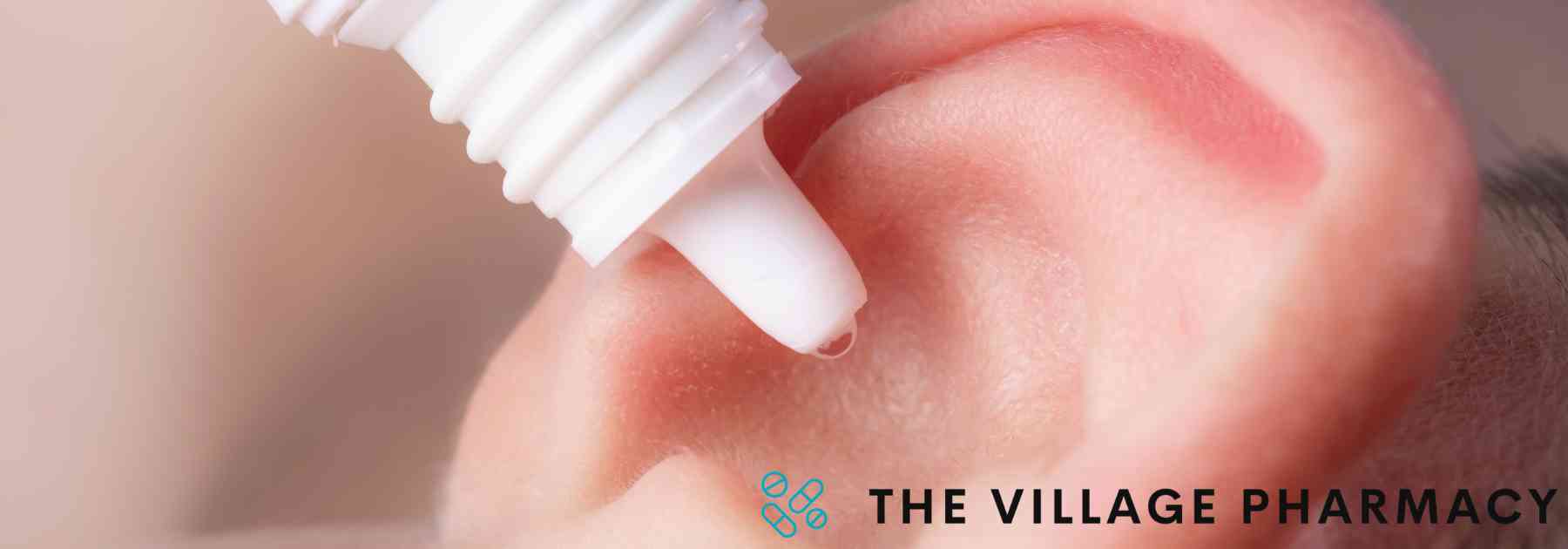
Olive oil ear drops are the first port of call for mild to moderate earwax build-up, recommended by the majority of UK healthcare professionals and endorsed as the preferred approach by the National Institute for Health and Care Excellence (NICE). The process is straightforward but does require patience and consistency to be effective. To use ear drops correctly, tilt your head to one side so that the affected ear is facing upwards, instil the recommended number of drops into the ear canal, and remain in this position for at least five minutes to allow the oil to penetrate and soften the wax. This should be repeated two to three times daily for two to three weeks.
It is important to use the drops at body temperature where possible — cold drops can cause temporary dizziness. You can warm the bottle slightly by holding it in your hands for a few minutes before use. Olive oil drops are available over the counter and are suitable for most adults and older children. Sodium bicarbonate ear drops are an alternative option that may be more effective for harder, drier wax, though they can occasionally cause a mild fizzing sensation in the ear which some people find uncomfortable.
If your symptoms do not improve after two to three weeks of consistent ear drop use, or if they worsen at any point, this is a clear indication that professional earwax removal is needed. Our team at The Village Pharmacy is always happy to advise on whether ear drops are appropriate for your situation and whether a microsuction appointment would be beneficial. Contact us to book your consultation today.
Ear Microsuction: The Gold Standard in Earwax Removal
Ear microsuction has become the preferred method of professional earwax removal among ear health specialists, largely replacing the older technique of ear irrigation (syringing) in many clinical settings. The procedure involves the use of a small, low-pressure suction device to gently draw wax out of the ear canal, guided by a specialist microscope or binocular loupe that gives the practitioner a clear, magnified view of the ear canal throughout the procedure. This level of precision makes microsuction significantly safer and more comfortable than irrigation, as there is no risk of water entering the middle ear and the practitioner can see exactly what they are doing at all times.
One of the key advantages of microsuction over other methods is that it is suitable for a much broader range of patients, including those with a history of perforated eardrums, previous ear surgery, or those who have experienced complications with syringing in the past, subject to clinical assessment. The procedure typically takes between 15 and 30 minutes, with most patients noticing a significant improvement in their hearing immediately afterwards. Using softening drops for at least five to seven days before your appointment is recommended to soften the wax and help ensure the best possible outcome from your microsuction procedure.
Methods to Avoid When Extracting Earwax
Despite their widespread availability and popularity, cotton buds are one of the most counterproductive tools a person can use in an attempt to clean their ears. Rather than removing wax, cotton buds typically push it further down the ear canal towards the eardrum, causing or worsening impaction. They can also strip the delicate skin lining the ear canal, remove the protective layer of wax that the ear needs to function properly, and cause abrasions that increase the risk of infection. The NHS and most ear health professionals are unequivocal on this point: cotton buds should never be inserted into the ear canal.
Ear candles — hollow fabric tubes coated in wax or paraffin, placed in the ear and lit at the opposite end — are frequently marketed as a natural earwax removal remedy. However, there is no credible clinical evidence to support their effectiveness, and multiple studies have demonstrated that they do not create the negative pressure needed to draw wax out of the ear. More concerning still, ear candles carry genuine risks including burns to the face and ear canal, deposits of candle wax in the ear, and fire hazards. They are not recommended by any reputable healthcare professional or organisation.
Frequently Asked Questions
Here are the earwax extraction questions our patients ask us most often, answered by the ear health team at The Village Pharmacy in Chelmsford.
How long does it take for ear drops to dissolve earwax?
Ear drops typically take two to three weeks of consistent twice or three times daily use to adequately soften earwax sufficiently for it to migrate out of the ear canal naturally or to be removed more easily by a professional. If your symptoms have not improved after this period, it is advisable to book a professional earwax removal appointment rather than continuing with drops indefinitely.
Is ear microsuction painful?
Ear microsuction is generally very well tolerated and the majority of patients describe the sensation as mild pressure or a gentle tickle rather than pain. The suction noise can feel loud or startling for some patients, but the procedure is usually completed quickly and most people find it far more comfortable than they anticipated.
Can I use olive oil ear drops if I wear hearing aids?
Yes — olive oil ear drops are safe for use by hearing aid wearers and are in fact particularly recommended for this group, as hearing aid users are especially prone to earwax build-up. It is advisable to instil the drops in the evening and allow them to absorb overnight before reinserting your hearing aids in the morning.
Do I need a GP referral to have my ears cleaned at The Village Pharmacy?
No — you do not need a GP referral to book an ear microsuction appointment at The Village Pharmacy in Chelmsford. You can book directly through our website or by calling us, and our team will arrange a convenient appointment time for you.
How often should I have my ears professionally cleaned?
This varies significantly from person to person — some individuals only ever need professional earwax removal once or twice in their lifetime, while others, particularly hearing aid users or those with naturally narrow ear canals, may benefit from an appointment every six to twelve months. Our practitioners will advise you on the most appropriate schedule for your individual needs following your appointment.
Can earwax cause tinnitus?
Yes — a build-up of earwax is one of the most common and easily treatable causes of tinnitus, the perception of ringing, buzzing, or humming sounds in the ear. In many cases, professional earwax removal can lead to a significant reduction or complete resolution of tinnitus symptoms, though it is important to note that tinnitus can also have other causes that may require further investigation.
Hear Clearly Again with Expert Earwax Removal
Whether your earwax build-up is mild enough to respond to a course of ear drops or significant enough to require professional microsuction, the most important thing is that you address it safely and with the right guidance. Attempting to extract earwax using cotton buds, ear candles, or other unsuitable DIY methods risks making the problem considerably worse and can lead to injury or infection that is entirely avoidable.
Our fully trained ear health team at The Village Pharmacy in Chelmsford provides expert microsuction in a welcoming, clinical environment, with no GP referral needed to book your appointment. We also stock a full range of ear drop products and can advise you on the most appropriate approach for your specific situation. Book your appointment today and take the first step towards clearer, more comfortable hearing.

Disclaimer: The information provided in this blog post is intended for general informational purposes only and does not constitute medical advice. Ear conditions can vary significantly between individuals, and readers are strongly advised to consult a qualified medical professional or healthcare provider before beginning any treatment or procedure relating to earwax removal. If you are experiencing severe ear pain, sudden hearing loss, dizziness, discharge from the ear, or any other concerning symptoms, please seek prompt medical attention rather than attempting self-treatment.